One source of truth
Unifying registries, statuses, decisions and history without losing source information.
Product case study
How domain knowledge, observation of a public office's daily work and iterative development led to a multi-module Django system used by public administration.
Production system · continuously developed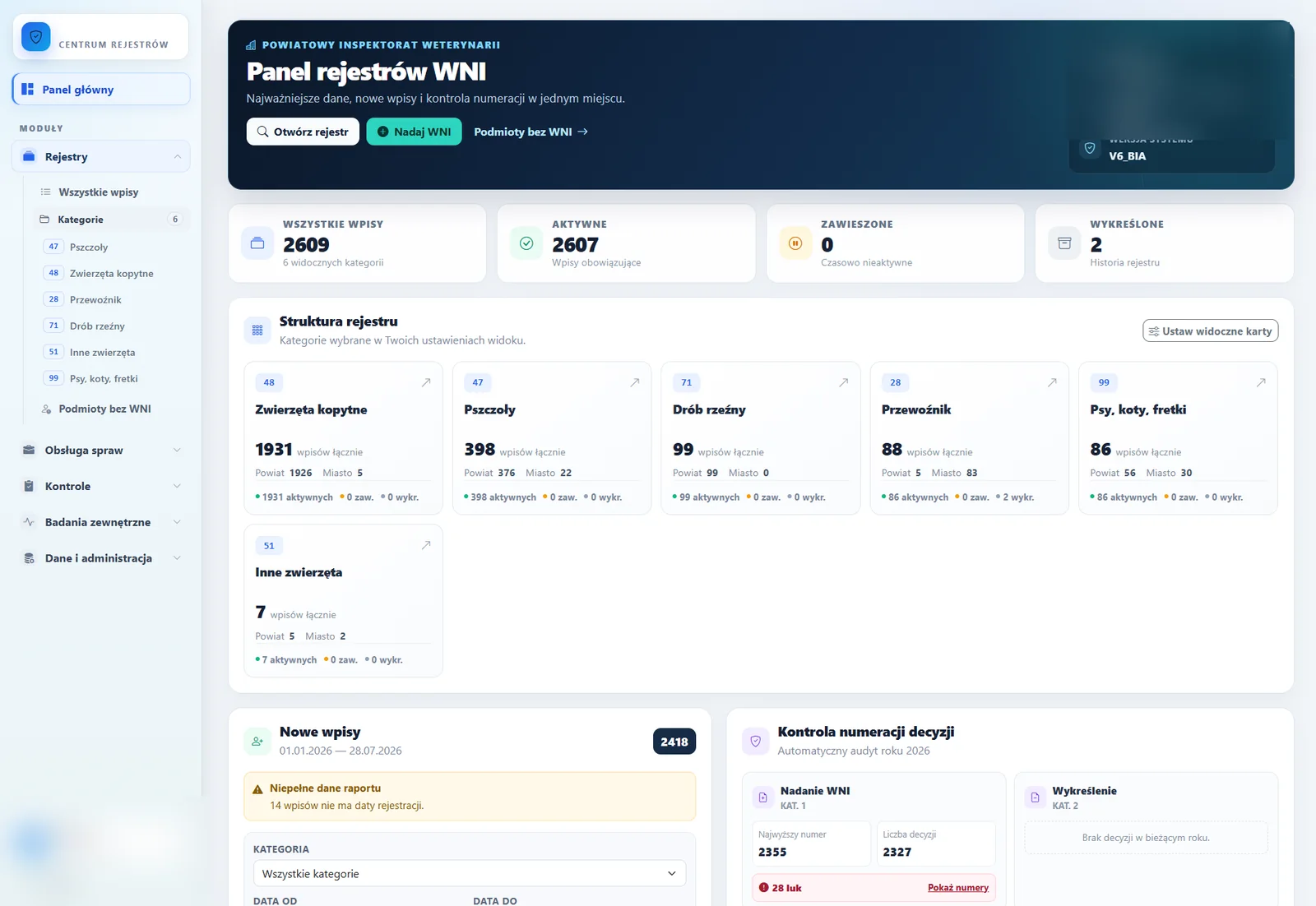
Project overview
WNI Registry was created in response to scattered spreadsheets, manual workflows and the need for immediate access to current data. It brings supervised-activity registries, administrative decisions, inspections, laboratory results, documents and reporting into one application.
The system operates independently of ARiMR, can run inside a controlled local network and is developed through observation of the real work performed by operators, coordinators and management.
Starting point
The information required to handle supervised activities was distributed across spreadsheets, documents and external sources. Every change had to preserve decision numbering continuity, administrative history and compliance with official procedures.
Unifying registries, statuses, decisions and history without losing source information.
Representing WNI assignment, decisions, suspension, removal and reactivation.
Numbering audits, permissions, operation history, import validation and backups.
An interface suitable for daily work by users with different levels of technical experience.
Working method
Modules were not built from an abstract feature list. Each stage began with a real user problem, data analysis and procedural constraints, and ended with observing the solution in practical use.
Mapping the real workflow, exceptions and user responsibilities.
Designing relations, statuses, change history and integrity rules.
Building the Django module, forms, permissions and user interface.
Automated tests, viewport audits and validation against production-like cases.
Corrections and new capabilities derived from everyday system use.
Architecture
The application is accessed through a browser and can run exclusively inside a local network. The domain layer separates registries, inspections, documents and imports, while PostgreSQL stores a consistent view of the data.
System scope
Search, statuses, history, related activities and the complete entry lifecycle.
Numbering, templates, PDF decisions, applications and protected bulk correspondence.
Protocols, results, irregularities, follow-up actions and period reports.
Inspection scopes, baseline counts, percentage targets and automatic progress calculations.
Validated Excel/ARiMR imports and Salmonella results matched to WNI entries.
Configurable Excel datasets, management indicators and data quality controls.
Design decisions
The system can run locally without sending entity data to the author's infrastructure.
Files are analysed before saving, with new, changed and problematic records clearly identified.
Important changes remain accountable, and archiving does not remove links or past results.
Access depends on the user's role, assigned categories and operational responsibility.
Quality
In an administrative system, an error may mean more than a broken screen: it can also produce an inconsistent decision number or an incorrect document. Quality control therefore covers domain logic, imports, permissions and multiple viewports.
Outcome
The system shortens the path from finding an entity to completing an operation, connects operational data with reporting and allows new modules to grow without splitting information into additional spreadsheets.
Product evolution
Centralised entries, categories and statuses.
Numbering, PDF generation and operation history.
Validation of spreadsheets and external exports.
SPIWET workflows, annual supervision scopes and progress measurement.
Salmonella results connected directly to WNI entries.
Further capabilities based on production use and user feedback.
The system in practice
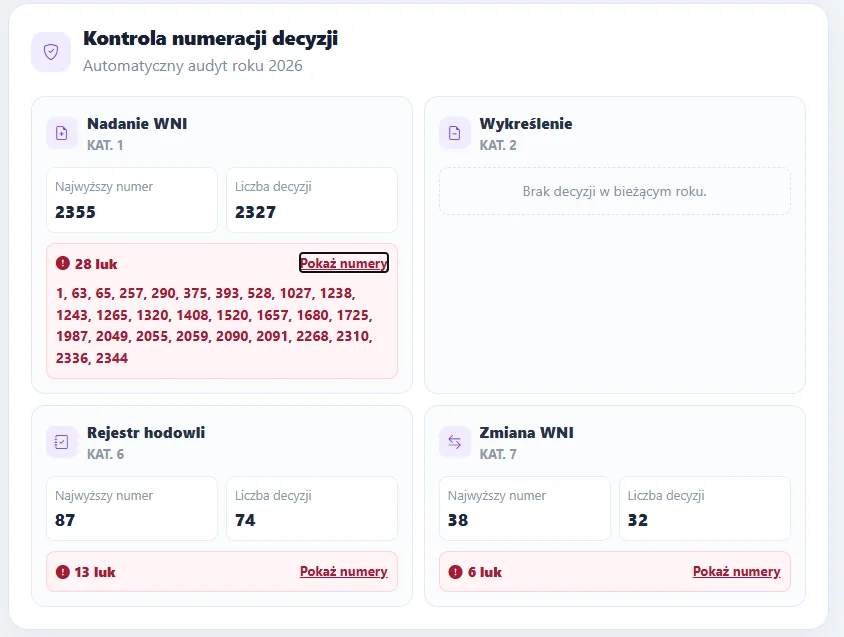
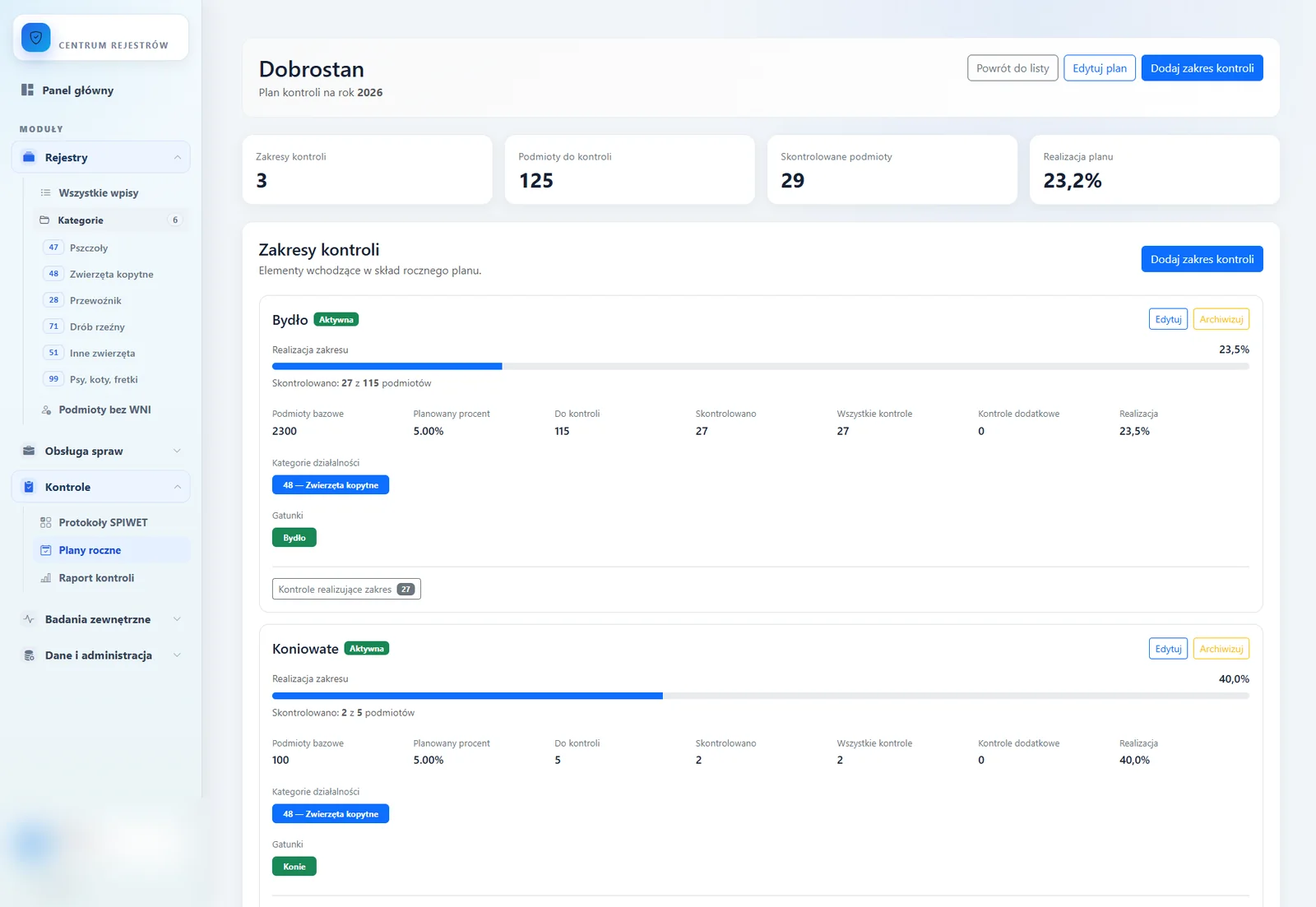
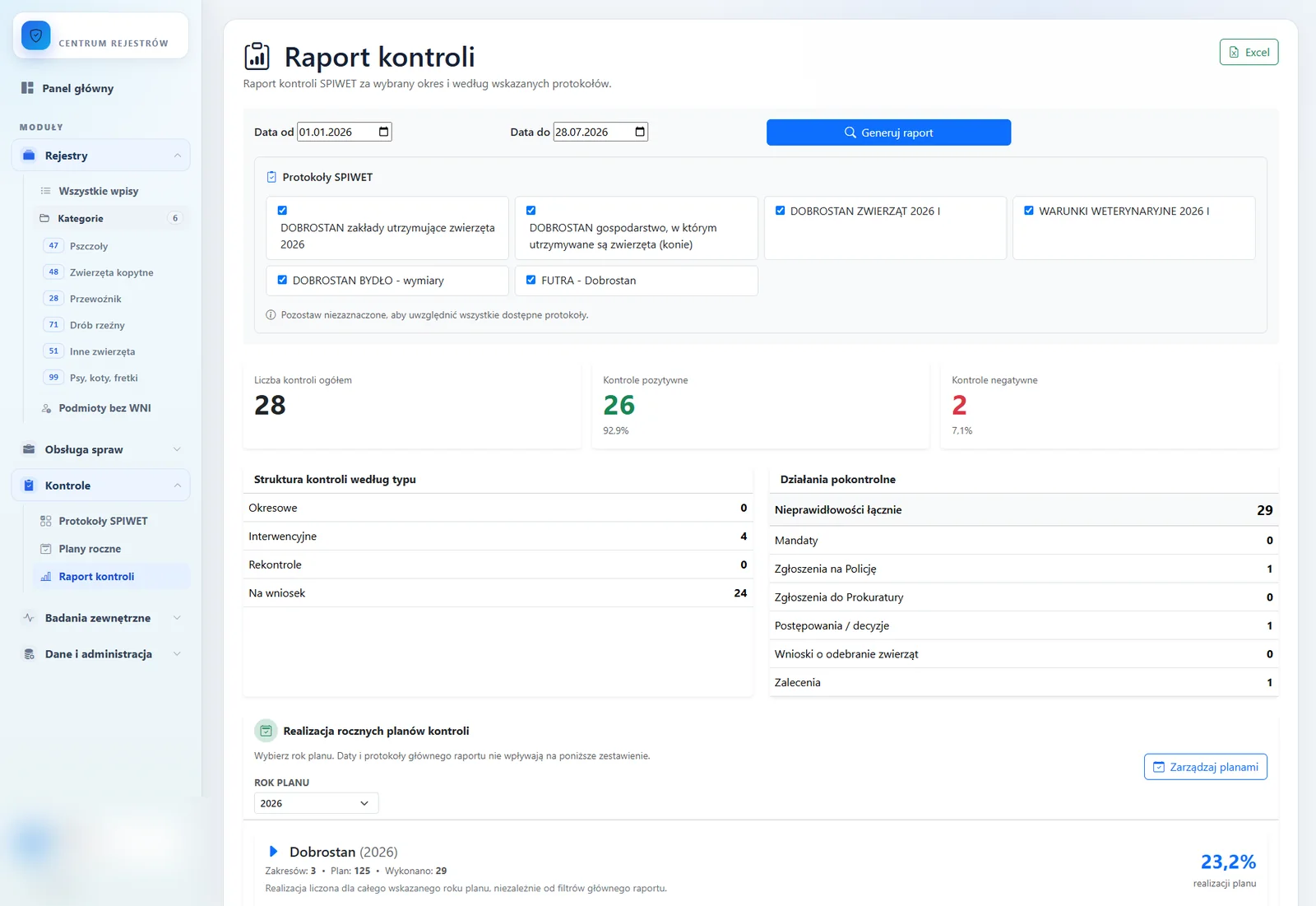
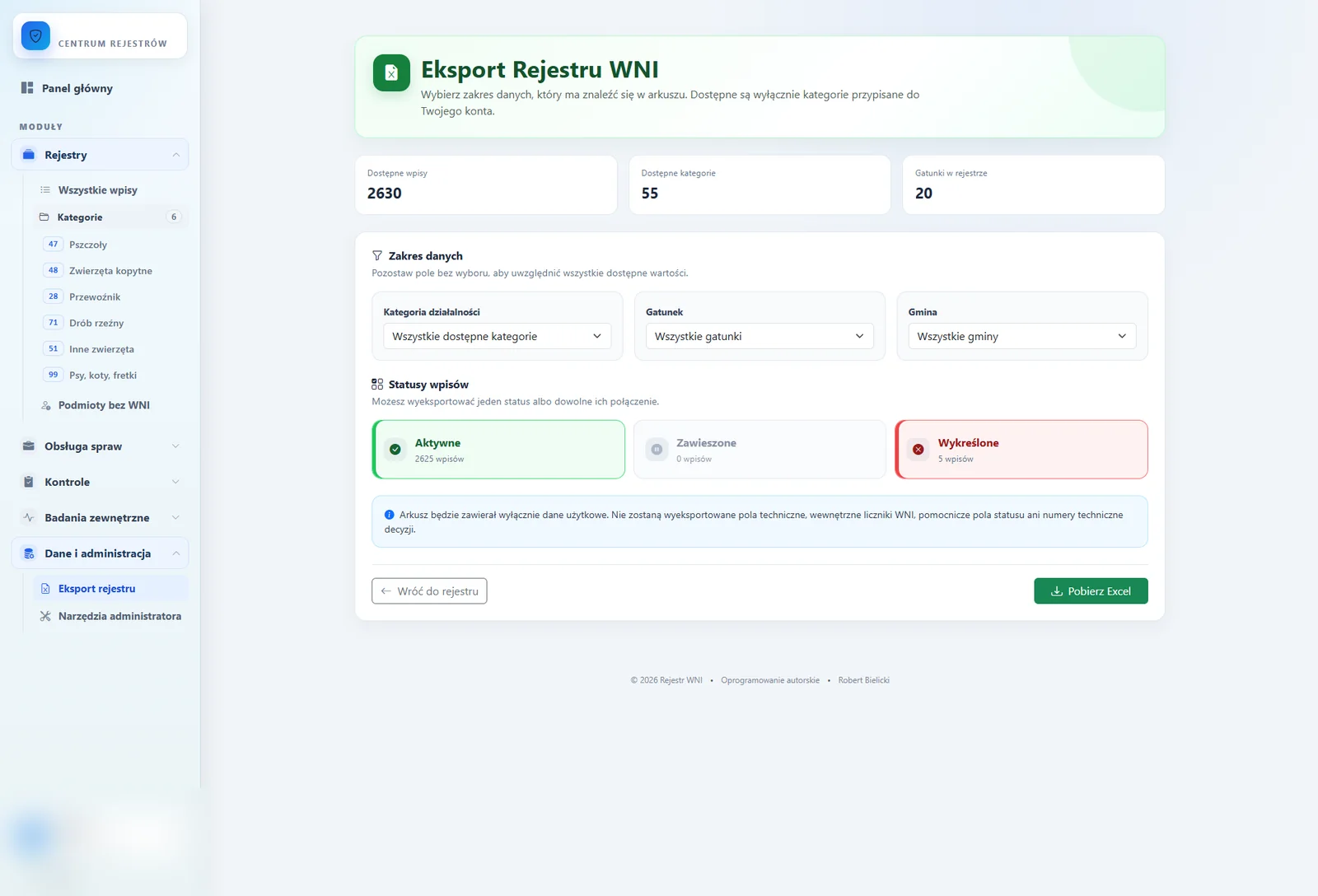
The source code is private due to the nature of the solution and data protection. The commercial offer describes the product scope, deployment and licensing.